How to Groom a Cat at Home: Brushing, Nail Trimming and Bathing
The Tail Project TeamBy The Tail Project Team · Updated 26 October 2026 · 7 min read
Quick answer: Brush short-haired cats every 1–2 weeks, medium-haired cats weekly and long-haired cats (like Persians) daily. Trim nails every 10–14 days, cutting only the clear tip and avoiding the pink quick. Most cats rarely need a full bath, so wash only when they're truly dirty, with lukewarm water and a cat-safe shampoo. Keep sessions short, calm and full of treats.
Cats are famously good at keeping themselves clean. So why groom them at all?
Because regular brushing removes loose fur before your cat swallows it, which means fewer hairballs and less hair on your sofa. Grooming also helps you spot lumps, ticks, skin problems or sore spots early, and when done gently, it can become a bonding ritual your cat enjoys.

Cat grooming schedule at a glance
| Task | How often |
|---|---|
| Brushing: short hair | Every 1–2 weeks (some cats only monthly) |
| Brushing: medium hair | Weekly |
| Brushing: long hair (Persian, Maine Coon) | Daily, plus combing to prevent mats |
| Nail trim | Every 10–14 days |
| Bath | Only when needed (hairless breeds weekly) |
| Quick body check | During every grooming session |
Brushing guidance from Purina; nail-trim frequency from the Wisconsin Humane Society.
How to brush your cat

Pick the right brush
- Short-haired cats: a soft bristle brush or rubber grooming glove lifts loose fur gently.
- Long-haired cats: a slicker brush with comb helps work through the undercoat and catch tangles before they become mats.
- Any coat: a 2-sided brush & comb lets you detangle and finish with one tool.
Step by step
- Start when your cat is relaxed, such as after a meal or during a cuddle.
- Begin with the areas most cats like, such as cheeks, chin and back.
- Brush in the direction the fur grows, using light strokes.
- For long hair, gently comb through small sections, holding the fur near the skin so you don't pull.
- Stop before your cat gets annoyed. Watch for a twitching tail, flattened ears or skin rippling. Two minutes of happy brushing beats ten minutes of struggle.
- Reward with a treat or play.
Mats: never cut a mat out with scissors. Cat skin is thin and very easy to cut. Gently tease small mats apart, or ask a groomer or vet to remove larger ones.
Keep a pet lint roller handy for the fur that ends up on your clothes and furniture anyway.
How to trim your cat's nails

Indoor cats especially benefit from regular nail trims, which protect your furniture and your skin, and stop nails from overgrowing.
- Get your cat used to paw handling. Touch and gently hold their paws during cuddles, with treats. Purina suggests doing this during play or cuddle time before you start trimming.
- Extend the claw. Gently press the toe pad and the claw slides out.
- Find the quick. It's the pink part inside the nail. Cut only the clear, sharp tip in front of it. The Wisconsin Humane Society's advice: "It's better to be cautious and cut less of the nail."
- Start small. Trim just one or two claws per session at first. Don't forget the dewclaw on the front legs.
- Treat after every nail.
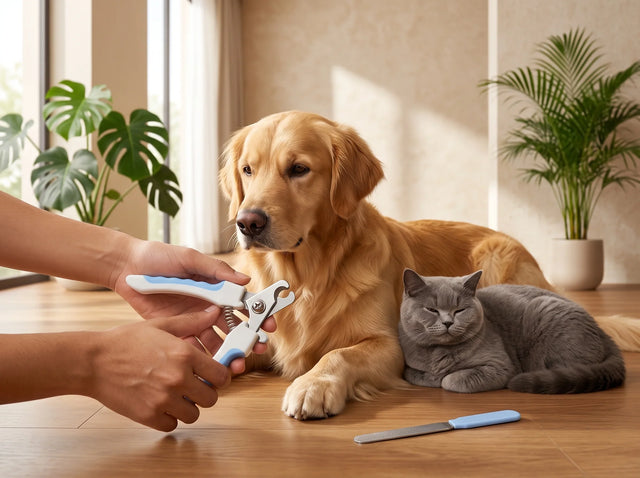
Use a sharp clipper designed for pets. Our Pet Nail Clipper with Nail Filer works for both cats and dogs. Keep styptic powder nearby in case you nick the quick. If your cat absolutely refuses, your vet or a groomer can do it.
Do cats need baths?
Most healthy cats with fur rarely need a full bath. Their self-grooming does a good job. A bath makes sense if your cat has got into something sticky or smelly, has a skin condition your vet wants treated with a medicated shampoo, is elderly or overweight and can't groom fully, or is a hairless breed (these need weekly baths).
For many cats, a damp washcloth or wipe-down is a lower-stress alternative, as Purina also suggests.
How to bathe a cat (when you have to)

- Trim nails a day or two before, for your safety.
- Brush first to remove loose fur and tangles. Purina recommends separating brushing and bathing with a break.
- Prepare everything before you bring your cat in: towels, shampoo, a jug of lukewarm water and a non-slip mat in the sink or tub.
- Use only a few inches of lukewarm water. Keep water away from the face, eyes and ears.
- Use a shampoo that's labelled safe for cats. Never use human shampoo. Our guide on why human shampoo isn't suitable for pets explains why.
- Massage the lather in gently. A soft silicone cat shampoo brush or a pet bath glove spreads shampoo evenly and feels like a massage, which many cats find calmer than hands alone.
- Rinse thoroughly, since leftover shampoo can irritate skin.
- Towel dry well and keep your cat in a warm room until fully dry.
Ears, eyes and teeth
- Ears: take a quick look during grooming. Healthy ears are clean and pale pink. Don't push anything into the ear canal. Dark discharge, smell, redness or head-shaking need a vet check.
- Eyes: gently wipe away crust from the corners with a soft, damp cloth. Ongoing discharge or squinting should be checked by a vet.
- Teeth: ask your vet about dental care at your cat's check-ups. Bad breath, drooling or difficulty eating are worth a visit.
Tips for stress-free cat grooming

- Start young if you can. With adult cats, begin with very short sessions and build up slowly.
- Keep it short. Several 2–3 minute sessions are better than one long one.
- Use a calm voice and lots of treats.
- Pick quiet times, away from noise, other pets and kids.
- Never punish or scold a cat that resists. Stop and try again later.
When to see a vet instead
Contact your vet if you notice bald patches, scabs, redness, lumps, fleas or ticks, a sudden increase in hairballs, a cat that has stopped grooming itself, a greasy or unkempt coat, or any change in appetite or behaviour. Cats are good at hiding pain, so small changes matter.
Frequently asked questions
How often should I brush my cat?
Short-haired cats every 1–2 weeks, medium-haired cats weekly and long-haired cats daily. Brush more often during heavy shedding.
How often should I bathe my cat?
Most furred cats rarely need a bath. Bathe only when they're genuinely dirty or your vet recommends it. Hairless breeds need weekly baths.
How often should I trim my cat's nails?
Every 10–14 days is a good routine. Trim only the sharp, clear tip and avoid the pink quick.
Can I use dog shampoo on my cat?
Only if the product is clearly labelled as safe for cats. Some products made for dogs contain ingredients that are not suitable for cats. When in doubt, ask your vet.
Does brushing help with hairballs?
Yes. Regular brushing removes loose fur before your cat swallows it while self-grooming, which can reduce hairballs.
The bottom line
Brush regularly, trim nails every couple of weeks, bathe only when needed, and keep every session short, gentle and rewarding. Your cat and your sofa will thank you. 🐱
Explore everything you need in our cat grooming collection.
Related guides
- How to Trim Your Dog's Nails at Home: Step-by-Step
- Can You Use Human Shampoo on Dogs?
- Diwali Crackers & Pets: How to Keep Dogs and Cats Calm and Safe
Sources
- Purina – Guide to grooming a cat
- Wisconsin Humane Society – Cat nail trimming 101
- Banfield Pet Hospital – Cat grooming
This guide is for general information and is not a substitute for advice from your veterinarian.